Alsatian House
-
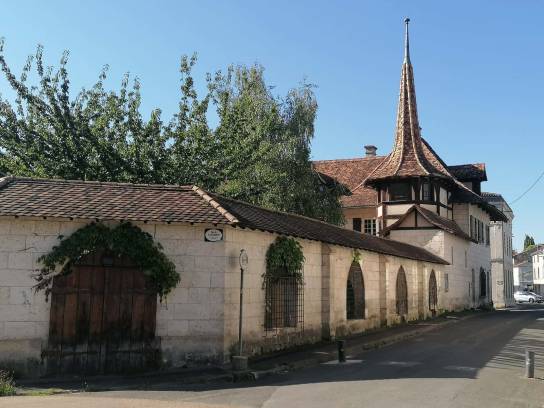 Photo creditjljLicenseFree Art License
-
 Photo creditjljLicenseFree Art License
-
 Photo creditPole ImageLicenseCC BY-SA 4.0


About
The Maison Alsacienne d'Angoulême is one of the most distinctive buildings in the city's architectural heritage. Located on the banks of the Charente River, it stands in stark contrast to Angoulême's traditional architecture, drawing its inspiration directly from the half-timbered houses of Alsace.
History
The Alsatian House was built in the late 19th century for the industrialist and inventor Lazare Weiller. A native of Alsace, Weiller wished to affirm his attachment to his native region following the annexation of Alsace-Lorraine by the German Empire in 1871. The house thus serves as both an architectural and symbolic testament to this Alsatian heritage in the Charente region.
Architecture
The building incorporates the main features of Alsatian architecture:
- an exposed half-timbered structure;
- decorative timberwork;
- polychrome facades;
- steeply pitched roofs;
- decor inspired by the townhouses of Strasbourg, Colmar, and Riquewihr.
In Angoulême, where limestone buildings and 17th- to 19th-century mansions predominate, this house is a true exception. It is part of the eclectic movement of the late 19th century, a period when architects readily drew inspiration from regional and historical styles.
Heritage Value
The Alsatian House is now considered a remarkable part of Angoulême's heritage. The heritage report prepared for the city's architectural preservation program lists it among the exceptional 19th-century bourgeois residences, alongside the Château de Dampierre and other iconic buildings.
Its heritage value is based on several factors:
- its uniqueness in Angoulême;
- its architectural significance as an example of regionalist architecture;
- its connection to the figure of Lazare Weiller, an industrialist, inventor, and patron of the arts;
- its role as a testament to the economic development of the Charente riverfront during the Belle Époque.
A Part of Angoulême's Heritage
Angoulême is best known for its Romanesque heritage, its ramparts, its mansions, and the works of architect Paul Abadie. In this context, the Alsatian House adds an original touch that illustrates the city's architectural diversity and the national influences of the late 19th century. It contributes to the richness of the protected urban landscape of the plateau and the riverbanks, which are now included in Angoulême's architectural heritage preservation measures.
Visits
The Alsatian House is not open to the public on a regular basis. It is currently used by departments of the Nouvelle-Aquitaine Region, which limits public access.
However, it is possible to explore it from the public space and during certain heritage events:
- European Heritage Days: The house opens its doors exceptionally for guided tours, allowing visitors to explore the interiors, the garden, and the history of Lazare Weiller. Previous editions offered guided tours on Saturday and a self-guided tour on Sunday.
- Guided Tours by the Pays d'Art et d'Histoire / Tourist Office: In some years, a "quick tour” dedicated to the Maison Alsacienne is scheduled, usually by reservation.
In short, the Alsatian House is not just an architectural curiosity: it stands as a testament to industrial history, the migration of entrepreneurs after 1871, and the taste for regionalist architecture that defined the Belle Époque.