Desaix Rampart
-
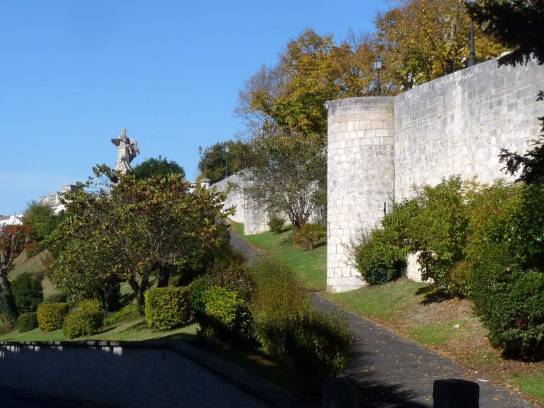 Photo creditJack maLicenseCC BY-SA 3.0
 -
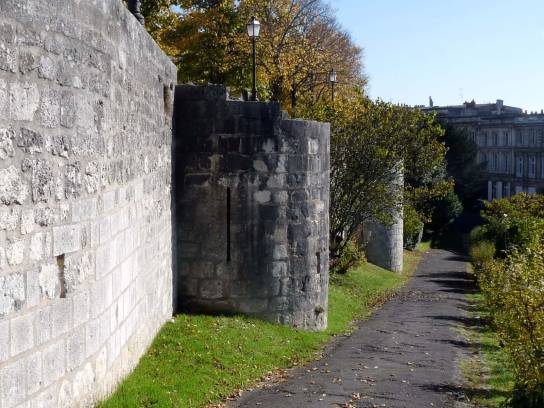 Photo creditJack maLicenseCC BY-SA 3.0
 -
 Photo creditJLPCLicenseCC BY-SA 3.0
 -
 Photo creditJack maLicenseCC BY-SA 3.0


About
The Desaix Rampart is one of the most iconic sections of Angoulême’s ramparts. Located on the southwestern side of the historic city, it offers a sweeping view of the Charente Valley and bears witness to nearly seventeen centuries of urban and military development.
History
Angoulême’s earliest fortifications date back to the late 3rd or early 4th century, when the Gallo-Roman town of Iculisma was surrounded by a wall to defend against invasions. This wall was reinforced in the 9th century by Count Vulgrin, then significantly expanded in the 12th and 13th centuries to protect the rapidly growing medieval city.
The Desaix section of the ramparts corresponds to a part of this medieval enclosure. Heritage studies show that the walls in this area also preserve remnants of the ancient enclosure, particularly near the Clovis Tower.
Beginning in the 18th century, the ramparts lost their military function. The city gates were gradually demolished, the curtain walls were leveled, and the old fortifications were transformed into a public promenade offering remarkable views of the Charente landscape.
Architecture
The Desaix rampart displays the typical characteristics of Angoulême’s fortifications:
- a massive curtain wall built of local limestone;
- remnants of ancient masonry incorporated into the medieval reconstructions;
- semicircular flanking towers dating from the 12th and 13th centuries;
- landscaping carried out in the 18th and 19th centuries to transform the old defenses into an urban promenade.
The name “Desaix” pays tribute to General Louis Charles Antoine Desaix, a hero of the Revolutionary and Consulate Wars.
Heritage
The Desaix rampart is now a major part of Angoulême’s heritage:
- the ramparts of Angoulême have been listed as Historic Monuments since December 18, 1958;
- they contribute to the distinctive landscape of the “upper town,” nicknamed the “balcony of the Charente”;
- the area is part of the Angoulême Remarkable Heritage Site, established to preserve the historical, architectural, and landscape qualities of the old town center.
The Desaix rampart also features several notable heritage sites:
- the monument to Sadi Carnot (1897), designed by architect Henri Deglane and sculptor Raoul Verlet;
- nearby, the famous “Leg of Clovis,” a sculpture linked to the tradition of Clovis’s conquest of Angoulême in 508.
Heritage Significance
The Desaix rampart illustrates Angoulême’s evolution over the centuries:
- a defensive structure during Antiquity and the Middle Ages;
- a scenic promenade from the 18th century onward;
- a space of remembrance combining military architecture, commemorative monuments, and urban landscapes.
Today, it is one of Angoulême’s most popular viewpoints and one of the most representative features of its identity as a fortified city.