Jardin de Curé
-
 Photo creditDignacLicenseAll rights reserved
-
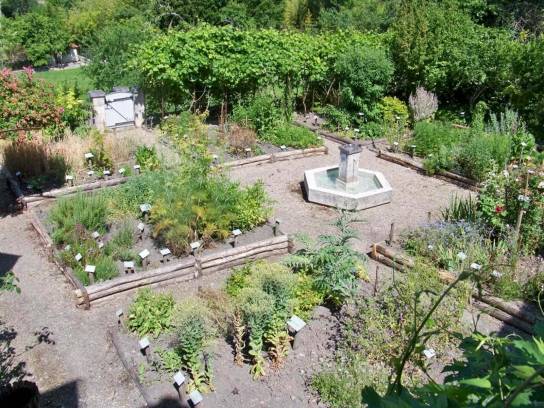 Photo creditDignacLicenseAll rights reserved


About
The Jardin de Curé in Dignac, also known as the Medieval Garden of Dignac, is a small botanical garden situated at the foot of the church, in the centre of the village. Created in 2000, it features edible, medicinal, dye-producing and ornamental plants inspired by medieval practices. Its central fountain, its flowerbeds arranged in a cross-shaped pattern and its interlaced borders give it a layout characteristic of medieval gardens.
Discover
Introduction
Situated in the old village of Dignac, below the church, the garden was established in 2000 to revive the tradition of medieval gardens and pass on knowledge of the plants once cultivated there. The project draws in particular on the Capitularies De villis, a text associated with Charlemagne which listed plants to be cultivated on imperial estates.
The garden is organised around a central fountain and raised beds. Each section has a specific purpose: a kitchen garden, medicinal plants, plants used for textiles and dyes, plants associated with religious traditions, and an orchard. Labels help visitors to identify the plants by name and understand their historical uses.
On a human scale, the site is best explored slowly, by observing the shapes, textures and different categories of plants. Its appeal lies primarily in its botanical, educational and landscape value: it demonstrates how a garden can preserve the memory of ancient horticultural practices at the heart of a village in the Charente.
Landscapes and natural environments
The Jardin de Curé is not a wild natural space, but a cultivated garden organised according to a historical layout. Its landscape is based on several complementary elements:
- Geometric flowerbeds: raised squares arranged around the centre of the garden.
- The chestnut hedges: woven borders that delineate the planting areas.
- The central fountain: a defining feature that brings a sense of stone and water.
- The cultivated areas: a vegetable garden, useful plants, flowers and plants of historical interest.
The garden is set within a village setting, in the immediate vicinity of the church and the historic centre of Dignac. It should therefore not be confused with a woodland park or a wetland: its landscape value lies in the layout of the plantings and the diversity of uses represented.
Flora
The vegetation is the garden’s main attraction. Botanical sources describe a historical collection of around 160 plants, a figure that corresponds to the collection originally documented and not necessarily to the inventory currently present on site.
Medicinal and aromatic
plants ‘Simples’, the traditional name for plants used for their medicinal properties, occupy an important place in the medieval garden. The historical composition also includes aromatic plants intended for culinary and domestic uses.
Vegetable, textile and dye
plants These plants reflect the practical functions of ancient gardens: producing food, providing fibres and yielding dyes. The plants actually present may vary depending on the seasons and maintenance work.
Flowers
Ornamental plants complement the site’s role as a source of sustenance. Their appeal can be appreciated by observing the blooms as the seasons change.
Ecological and heritage value
Above all, the garden is of significance for botanical conservation and the transmission of knowledge. It helps to promote heritage plants and their uses, some of which are little known to the general public today.
The Nouvelle-Aquitaine Regional Biodiversity Agency lists the Dignac project amongst its initiatives to promote biodiversity. The project, launched in 2000, aims in particular to conserve historically cultivated plants and to share the knowledge associated with them.
Things to see and observe
The central
fountain It occupies the heart of the layout. Its four jets allude to the four rivers of paradise in medieval symbolism.
The flowerbeds and their woven
borders Take a look at the regular arrangement of the squares and the wickerwork that borders them. They give the garden its distinctive layout.
The plants and their labels
Take the time to read the information provided to understand the plants’ culinary, medicinal or craft uses.
Exploring the site
You can explore the site at your own pace, without following a specific walking route.
- Start by observing the general layout of the flowerbeds from the edge of the garden.
- Walk over to the fountain to understand the symbolism of its design.
- Walk through the various beds, taking note of the plants’ names and uses.
- Finish with an overview of the plantings and how they relate to the village’s historic setting.
The visit is suitable for families, particularly as a way to introduce children to botany and the history of cultivated plants. For a guided tour or a group visit, it is best to contact the local organisers before you visit.
Best time to visit
- Spring – an ideal time to visit. New shoots and the first blooms make the plantings easier to observe. It is a good time to discover the different plant forms.
- Summer – diversity of the plantings. Herbs and flowering plants can be particularly interesting to observe. However, the heat and drought may affect their appearance.
- Autumn – changes in foliage. If the plantings allow it, this season can offer a different perspective on perennials.
- Winter – appreciating the garden’s layout. The shapes of the flowerbeds and the structure of the borders remain interesting, even when there is little in bloom.
These guidelines are general seasonal pointers relating to cultivated plants. The actual condition of the garden depends on the plants present, the level of maintenance and the weather conditions.
Nearby
The garden is situated in the historic centre of Dignac. Your visit can be complemented by a few nearby points of interest.
- Saint-Cybard’s Church in Dignac. In the immediate vicinity. Situated just above the garden, the church is the site’s main landmark and helps to explain its location within the old village. Saint-Cybard’s Church is a Romanesque building listed as a historic monument.
- The old town centre of Dignac. A short stroll through the neighbouring streets allows you to continue exploring the village setting, though this walk should not be confused with a nature walk.
Continue the tour
To extend your outing, there are two options:
- Carry on on foot through the village, combining a visit to the garden with an exploration of the area around the church and the old streets.
- Head for the natural areas around Dignac to experience a change of scale and discover more open landscapes. It is advisable to choose a local route that has been checked before setting off, rather than treating the garden as the starting point for an unconfirmed signposted trail.
The garden is therefore ideal for a short botanical stop, to be incorporated into a wider exploration of the Pays d’Angoulême region.
Visit
Conditions of visits:
Opening hours
Prices
Equipment and services
- Free parking
- Toilets