Former Carmelite Convent
-
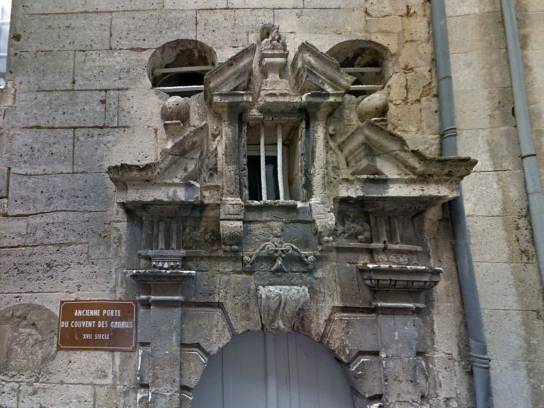 Photo creditgoldObotLicenseFree Art License
-
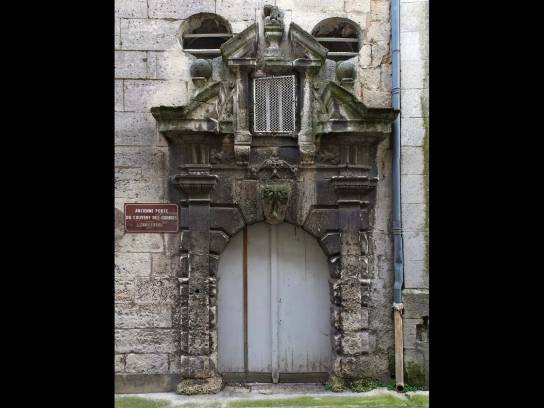 Photo creditJLPCLicenseCC BY-SA 3.0
-
 Photo creditJack maLicenseCC BY-SA 3.0
-
 Photo creditgoldObotLicenseFree Art License


About
The former Carmelite convent in Angoulême is a historic religious building located on Rue Turenne, in the historic center of Angoulême (Charente). Only part of the convent complex remains today, the most remarkable feature of which is its monumental gate.
History
- The Carmelites settled in Angoulême in 1633 on Rue de Turenne. Their convent was one of the religious institutions that shaped the development of the city's old quarter.
- In 1739, the nuns expanded their convent to the east. It was likely around this time that the large entrance gate visible today was constructed.
- After the French Revolution, religious orders were abolished and convent properties were dispersed or repurposed. The convent then lost its religious function.
The Gate of the Former Convent
The gate, located on Rue Turenne, is the best-preserved heritage feature:
- it features a semicircular arch;
- its frame is adorned with pilasters and bossages carved from cut stone;
- a keystone decorated with an acanthus leaf is its main sculpted motif;
- above it is an entablature with a pediment and a niche originally intended to hold a statue that is now missing.
This gate was listed as a Historic Monument by decree on March 4, 1925.
Current Status
The former convent has been integrated into the urban fabric of Angoulême. It no longer functions as a religious institution, but the gate still serves as a reminder of the importance of monastic communities in the city's history. It stands as a testament to 17th- and 18th-century religious architecture in Angoulême.
The site is not open to the public. Its heritage value lies primarily in the architectural remains, particularly around Rue de Turenne in Angoulême. The most visible part is the convent's old gate, which can be seen from the street.
Entry from the Mérimée database (architectural heritage): PA00104219