Balzac Castle
-
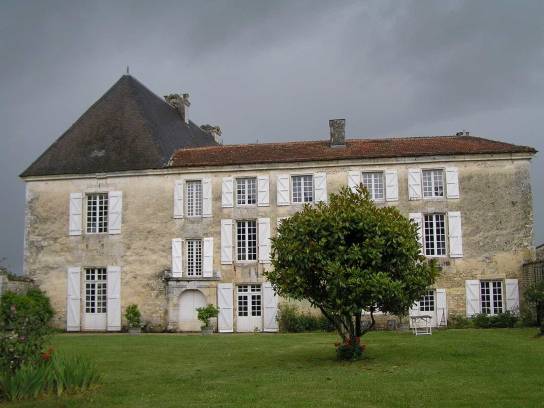 Photo creditRosierLicenseCC BY-SA 3.0
-
 Photo creditRosierLicenseCC BY-SA 3.0
-
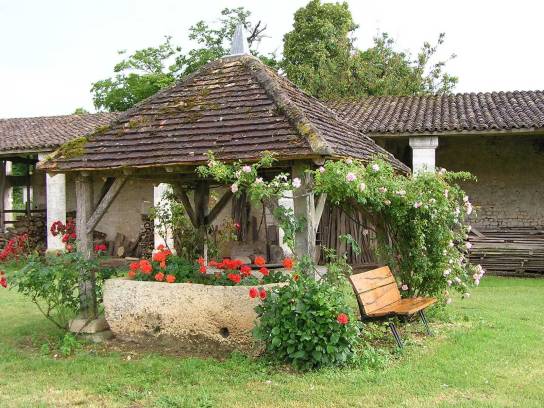 Photo creditRosierLicenseCC BY-SA 3.0
-
 Photo creditRosierLicenseCC BY-SA 3.0
-
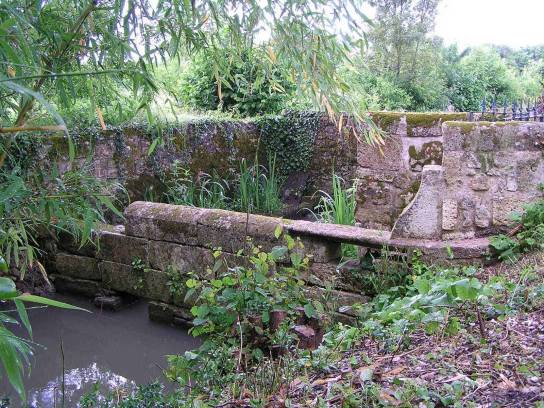 Photo creditRosierLicenseCC BY-SA 3.0
-
 Photo credit© PropriétaireLicenseAll rights reserved


About
Balzac Castle is closely associated with Jean-Louis Guez de Balzac (1597–1654), a writer and letter-writer from the Charente region who made it one of his residences. The present castle was built around 1600 by his father, Guillaume Guez, on the site of a former noble mansion.
The site is also notable for the stay of Marie de Médicis, who lived there for several months in 1619 following her escape from the Château de Blois. The residence then became a venue for political and intellectual gatherings.
The estate retains architectural and decorative features from several periods: 17th-century wall frescoes, outbuildings, a Charente-style porch, 18th-century colonnades, a cobbled courtyard, a canal, a fishpond and a wash house.
Not to be missed
- The 17th-century wall frescoes in the entrance gallery.
- The courtyard and outbuildings, with the Charente-style porch and the 18th-century colonnades.
- The grounds and the canal-fishpond, which allow you to continue exploring the castle within its landscaped setting.
Discover
Introduction
Balzac Castle occupies a special place in the landscape of the Val d’Angoumois. Situated on the banks of the Charente, it comprises a historic residence, outbuildings and grounds centred around water features.
The castle is best known for its connection with Jean-Louis Guez de Balzac. Born in Angoulême in 1597, he spent part of his youth in Balzac and returned there later in life. The residence is thus linked to his literary career and his network of political and intellectual contacts.
The estate is also of scenic interest. Documents devoted to the landscape of the Pays d’Angoulême explicitly identify the château and its wooded grounds as among the heritage sites that define the region. The Charente valley forms a landscape of broad meanders, meadows and hillsides, within which the estate is situated.
History
Around 1600: the construction of the château
Guillaume Guez, father of Jean-Louis Guez de Balzac, had the château built around 1600 on the site of a noble mansion. The construction took place during a period of significant transformation of the residence.
The main building has a U-shaped layout, with a central section roofed with slate and lower wings roofed with tiles. This layout retains several features characteristic of the 17th century.
1619: Marie de Médicis at Balzac
Following her escape from the Château de Blois, Marie de Médicis stayed at Balzac for several months. The castle then became a meeting place for leading political figures. Cardinal Richelieu was notably among those associated with this episode.
17th century: Jean-Louis Guez de Balzac
Jean-Louis Guez de Balzac turned the residence into a retreat. His memory remains closely linked to the estate and largely accounts for its literary and historical significance.
18th century: alterations
The castle underwent major alterations in the 18th century. In particular, three new façades were built around the paved courtyard. The interiors were also remodelled, with the addition of rooms featuring wood panelling characteristic of the period.
The outbuildings, meanwhile, retain older features, notably buildings dating back to the 16th century and 18th-century colonnades.
Since 1974: restoration
The estate underwent a major restoration programme from 1974 onwards, following its acquisition by the Labrouhe de Laborderie family. The project aimed to restore and preserve the historic features of the house.
Recent work has focused in particular on the painted decorations and various parts of the building. Restoration of the 17th-century painted decorations was carried out in 2022.
Timeline
- Around 1600 – Construction of the castle by Guillaume Guez.
- 1619 – Marie de Médicis stayed at Balzac.
- 17th century – Jean-Louis Guez de Balzac lived and worked here; the painted decorations were created.
- 18th century – Extensions and refurbishments to the castle and outbuildings.
- 1974 – The estate was acquired by the Labrouhe de Laborderie family, and a major restoration programme began.
- 5 December 2007 – The castle, its outbuildings and several features of the grounds were listed as historic monuments.
- 2022 – Restoration of the 17th-century painted decorations.
Architecture and heritage
The castle reveals several phases of construction and alteration.
The central section, clad in slate, and the lower wings, clad in tiles, form part of the historic layout of the main building. Dormer windows with pediments and a wrought-iron balcony also bear witness to the early modern period.
Inside, the frescoes in the entrance gallery depict trompe-l’œil architecture and mythological figures. They are attributed to the 17th century and are thought to have been commissioned by Guez de Balzac.
The outbuildings offer another perspective on the estate: barns, stables, a Charente-style porch and colonnades form a complex directly linked to the running of the house.
The estate and the landscape
The castle should not be viewed in isolation. Its protected status also extends to its grounds, boundary walls, gates, fish-rearing canal and wash house.
The landscape of the Val d’Angoumois is particularly evident here: the Charente river forms wide meanders and its valley floor combines farmland, meadows and riverside vegetation. The castle and its grounds are one of the built features that punctuate this landscape.
Did you know?
Marie de Médicis’s stay in 1619 gave the castle a political significance that extends far beyond local history. During her stay, Balzac became a meeting place for several prominent figures from the political and intellectual elite of the time.
Explore
Guided tour
- Start with the estate
as a whole. From the outskirts, observe the relationship between the castle, Saint-Martin’s Church and the Charente countryside. The castle is not an isolated building: it forms a unified whole with its outbuildings, grounds and water features. - Observe the main building
Take a look at the castle’s layout: the taller central block and the wings that frame the courtyard. The differences in roofing and volume help to illustrate the various stages in the building’s history. - Enter the gallery
The wall frescoes are one of the most remarkable features of the tour. Observe the interplay between the actual architecture and the trompe-l’œil painted architecture. - Examine the decorative
details The wood panelling and the shapes of the rooms bear witness to the alterations carried out in the 18th century. The rounded corners and concave cupboard doors are particularly revealing details of this refurbishment programme. - Head out into the grounds
The tour naturally continues into the outdoor areas. The canal, the fishpond and the wash house are reminders of how the estate once functioned and its close connection with water.
Look here
- The frescoes: look out for the sense of depth created by the trompe-l’œil.
- The paved courtyard: observe the overall layout of the main house and the wings.
- The colonnades: these form part of the 18th-century alterations to the outbuildings.
- The canal and fishpond: these serve as a reminder that the historic estate combined architecture, gardens and water management.
Then / Now
The castle fell into disrepair before it was acquired in 1974. The owners then embarked on a long-term restoration project, which has continued over several decades.
The estate’s current state of preservation thus allows visitors to see both the traces of the various periods of construction and those of contemporary restoration work.
Nearby
- Saint-Martin’s Church, situated next to the château and forming a heritage complex with it.
- The Charente Valley, whose landscapes of meadows, meandering rivers and rolling hills form the estate’s natural setting.
- Angoulême, approximately 8 km from the château according to the estate’s official website.
Continue the tour
The castle can be included as part of a wider exploration of the Val d’Angoumois, following the River Charente and visiting the towns of Balzac, Vindelle and Marsac. This approach allows you to see the monument within the river landscape, of which it is one of the architectural landmarks.


Visit
Conditions of visits:
Opening hours
- Balzac Castle is open to the public from 12 July to 20 August, except on Saturdays:
- Free access to the château’s grounds, courtyard and garden: from 12 noon to 6 pm.
- Guided tour of the château’s interior, led by the owners at 5.00 pm.
- For European Heritage Days: guided tours at 11.00 am, 3.00 pm and 4.30 pm.
- Group visits can be arranged outside these dates. Please contact them.
Prices
- Self-guided tour of the grounds: free.
- Guided tour:
- Adults: €12.
- Children aged 6 to 15: €6.
- Children under 6: free.
- During Heritage Days: reduced rate of €10 per adult and €5 per child.
- Group tours: by arrangement.
Equipment and services
- Suitable for children
- Parking
- Bus parking
- Free private parking