Remains of the Duke of Épernon's ramparts
-
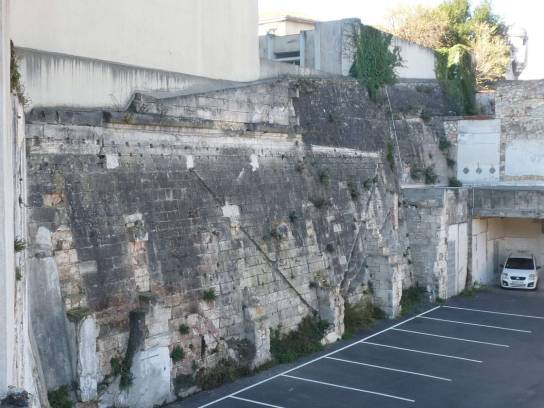 Photo creditJack maLicenseCC BY-SA 3.0
 -
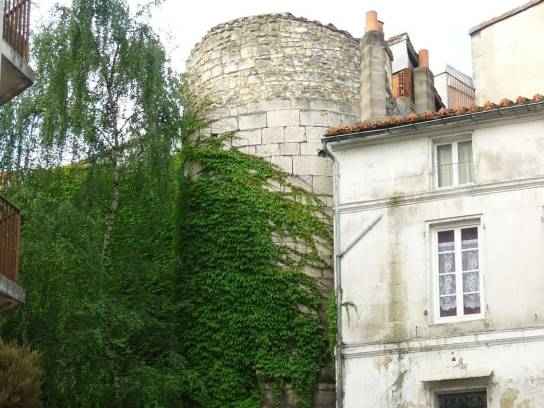 Photo creditJack maLicenseCC BY-SA 3.0
 -
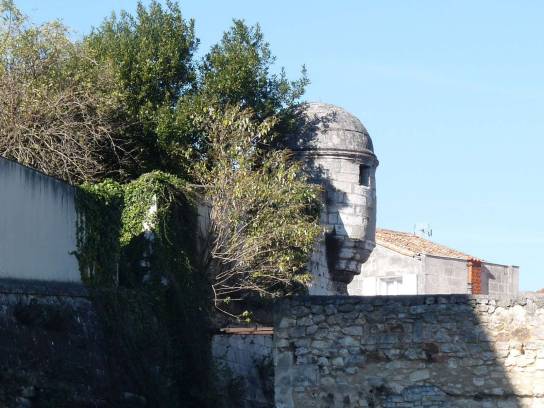 Photo creditJack maLicenseCC BY-SA 3.0
 -
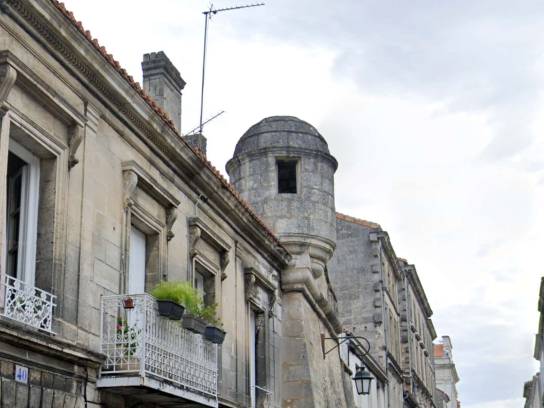 Photo creditgoldObotLicenseFree Art License


About
The remains of the Duke of Épernon’s ramparts are one of the most remarkable examples of Angoulême’s modern fortifications. They illustrate the evolution of military architecture in the late 16th and early 17th centuries.
History
These ramparts were built in the late 16th and early 17th centuries under the authority of Jean-Louis de Nogaret de La Valette, Duke of Épernon and governor of Angoumois. The decision to build them was made amid the turmoil of the Wars of Religion, shortly after an attempted kidnapping or assassination of the duke by members of the League.
They formed a modern bastioned enclosure protecting the old castle and the town, marking the transition from medieval fortifications to Renaissance-era defensive systems inspired by artillery. Historians consider this complex to be an important example of the evolution of French fortifications prior to the major works of the 17th century.
Architecture
The preserved remains include, in particular:
- a continuous section of approximately 200 meters integrated into the current residential area;
- two bastioned spurs;
- watchtowers (small sentry towers) located at the corners;
- a large stone embankment reaching 10 to 20 meters in height in some places;
- a partially preserved system of casemates;
- two circular towers still standing at the western end of the old wall.
Heritage Protection
The remains of the Duke of Épernon’s ramparts have been listed as historic monuments since April 21, 1972. The protection applies to the ruins located primarily around Marengo Street, Arsenal Street, Sauvage Street, and Belat Street.
Visiting
The ruins are scattered throughout the urban fabric of Angoulême, partly incorporated into private properties. They can be viewed from several points along the rampart trail, which also offers sweeping panoramic views of the Charente Valley. Some sections are freely visible from public spaces, while others are not accessible.
These ramparts are part of the larger complex of Angoulême’s fortifications, whose origins date back to the Gallo-Roman period and which were modified several times during the Middle Ages and the modern era.
Entry from the Mérimée database (architectural heritage): PA00104229

Visit
Conditions de visites
Opening hours
Prices
Localization
Vestiges des remparts du duc d'Épernon
Vestiges des remparts du duc d'Épernon
Rue Belat, rue de l'Arsenal, rue du Sauvage, rue Marengo,
16000 Angoulême