Bellevau Hermitage
-
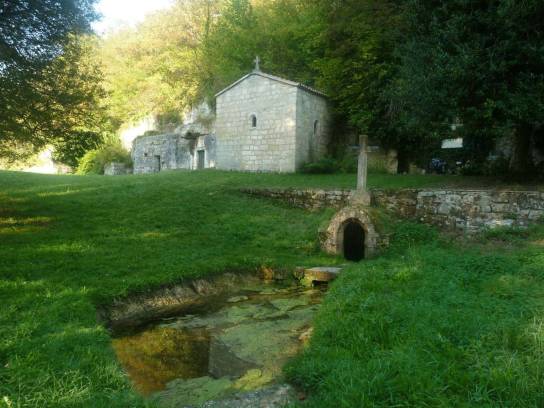 Photo creditJack maLicenseCC BY-SA 3.0
-
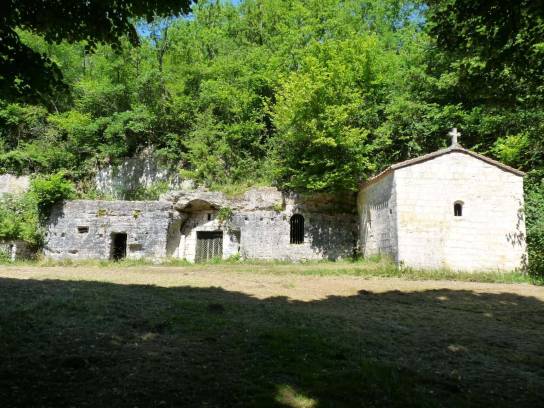 Photo creditJack maLicenseCC BY-SA 3.0
-
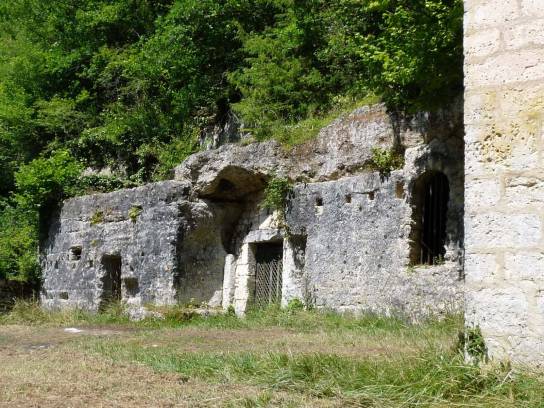 Photo creditJack maLicenseCC BY-SA 3.0
-
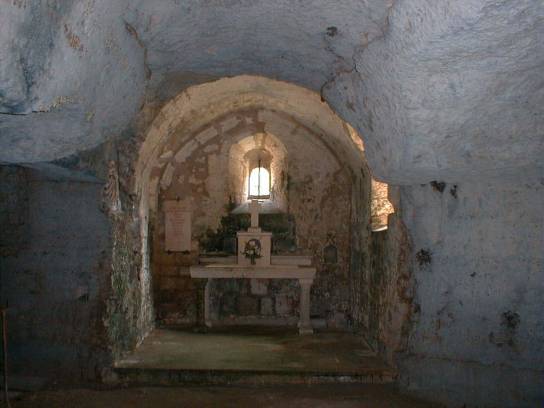 Photo creditgoldObot
-
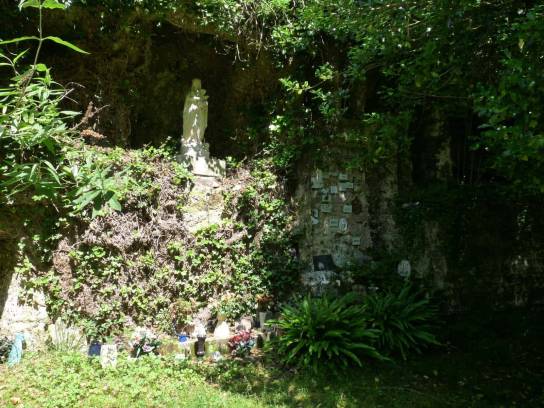 Photo creditJack maLicenseCC BY-SA 3.0
-
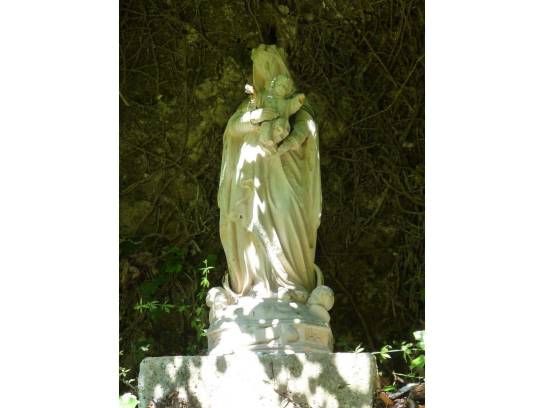 Photo creditJack maLicenseCC BY-SA 3.0


About
The Bellevau hermitage is situated on a hillside in the Échelle Valley, amidst a landscape of cliffs and natural caves. The site is traditionally associated with a hermitage dating from the 6th century, probably contemporary with that of Saint Cybard in Angoulême. The chapel, carved into the rock, retains traces of Romanesque decoration. An adjoining fountain has long been associated with devotional practices and therapeutic beliefs.
The site has been used in several different ways over the years. An extension to the chapel is documented in 1647, before the site regained its status as a Marian pilgrimage site in the 20th century. The tradition of pilgrimage dedicated to the Virgin Mary is still associated with 15 August today.
Not to be missed
- The cave chapel carved into the rock.
- The pillar bearing traces of Romanesque decoration.
- The Bellevau fountain and its rocky surroundings.
Discover
Introduction
Bellevau is one of those religious sites where the landscape and architecture are inseparable. The natural cavities in the hillside provided the hermits with an ideal setting for solitude and contemplation. The Échelle Valley, carved into the limestone landscape, thus contains traces of very ancient human occupation, dating from prehistoric times to the Christian era.
The hermitage is particularly interesting for its troglodytic character. The chapel is not a freestanding building set within the landscape: it is directly integrated into the rock that shelters it. Traces of dwellings carved into the cliff face – niches, storage pits, a fireplace or a window, depending on the descriptive sources – also bear witness to a wider occupation of the site.
History
The precise origins of Bellevau remain poorly documented. However, an ancient historical tradition attributes a Merovingian origin to the site, dating back to the 6th century. The supposed chronological proximity to the hermitage of Saint Cybard in Angoulême is regularly highlighted in documents devoted to the site.
In the 17th century, the hermitage entered a new phase of religious activity. Parish records mention a foundation aimed at reviving monastic life, whilst the chapel was extended in 1647.
In the 20th century, the site took on a more pronounced Marian character. In the 1950s, it became a place of pilgrimage dedicated to the Virgin Mary, with a celebration traditionally held on 15 August.
Timeline
- 6th century – Hermits are thought to have settled in the caves of Bellevau, as part of the development of monasticism in Gaul.
- Romanesque period – Traces of Romanesque decoration remain on the chapel’s pillar.
- 1647 – Enlargement of the chapel and installation of a new altar.
- 20th century – Revival of the site’s Marian devotion.
- 1950s – Development of the pilgrimage dedicated to the Virgin Mary.
- Today – The fountain remains accessible via the local footpath, whilst the caves and the chapel are private property and not open to the public outside scheduled opening hours.
Architecture & heritage
The defining feature of Bellevau lies in its troglodytic architecture. The rock is not merely the backdrop to the chapel: it forms an essential part of the place of worship.
The chapel is described as monolithic and retains a pillar supporting the vault, on which Romanesque decorative motifs remain. This combination of natural space, excavation and religious architecture helps to explain how certain ancient hermitages could be established directly within rock shelters.
Notable features
- The Romanesque pillar – This is one of the architectural features that should be observed first and foremost in the chapel. The traces of decoration provide evidence of the antiquity of the religious structures.
- The monolithic chapel – Its integration into the rock is the site’s most distinctive architectural feature.
- Traces of rock-cut dwellings – Historical records mention features such as niches, storage pits, a fireplace and a window, indicating that the site was used for more than just prayer.
- The fountain – Situated in the immediate vicinity, it forms part of the site’s devotional aspect. Its waters were traditionally reputed to be beneficial for sick children.
Did you know?
The reputation of the Bellevau fountain is not merely a recent tradition: it is part of a longer history of devotional practices linked to springs. Historical accounts describe customs intended, in particular, to seek healing or to ask for protection for the sick.
Explore
Guided tour
- Approach via the Échelle Valley.
The landscape makes it immediately clear why the natural caves would have encouraged hermits to settle here. - Observe the relationship between the cliff face and the buildings.
At Bellevau, the rock forms an integral part of the religious space. - Look out for the cave chapel.
The layout of the site reflects a form of religious life based on isolation and the use of natural shelters. - Look at the chapel’s pillar.
The traces of Romanesque decoration are one of the site’s most interesting architectural features. - Look for traces of habitation in the rock.
Niches, excavations and other features show that Bellevau was more than just an isolated chapel. - Continue on to the fountain.
It helps to explain the popular and therapeutic significance gradually associated with the site.
Look here
The best way to interpret this is not to view the chapel, the cavities and the fountain in isolation. Their proximity forms a coherent whole: a natural space that became a place of religious retreat, and later a place of devotion.
Yesterday / Today
- Yesterday: Bellevau combined a hermit’s life, rock-cut dwellings and devotion centred on the spring. The site subsequently underwent several transformations, notably in the 17th century.
- Today: The fountain can be reached via the local footpath, but the caves, the chapel and the former troglodyte dwellings are not open to the public. These areas are private.
Hidden detail
The real ‘hidden detail’ of Bellevau is less an object than a way of interpreting the site: looking for traces of human intervention in the cliff face. The site retains evidence of an occupation that combined places of worship with cave dwellings.
Environment
Bellevau lies within the Échelle Valley, an area characterised by rock cavities and shelters. The same landscape is also home to the Roc de Sers, famous for its Upper Palaeolithic remains. The guide to the ‘Miraculous Fountain’ walk thus presents Bellevau and the Roc de Sers as two distinct examples of the valley’s ancient occupation.
Nearby
- Roc-de-Sers – A major prehistoric site in the Échelle Valley, associated with Solutrean occupation and a significant carved frieze discovered during excavations in the early 20th century.
- Sers – The village offers further opportunities to explore the local heritage, notably through Saint-Pierre Church and the heritage linked to the commune’s ancient history.
- Échelle Valley – Well worth exploring to understand the landscape that explains why Bellevau was founded here: limestone terrain, cliffs, caves and watercourses.
Continue the tour
A cohesive tour can combine Bellevau, the Échelle Valley and the Roc de Sers, linking two very different periods of human occupation: the Palaeolithic rock-shelters and artefacts on the one hand, and the hermitic and religious settlement of Bellevau on the other.
Opening hours
The site is traditionally open to the public on 15 August for the Mass of the Assumption.