Saint Cybard Cave
-
 Photo creditJack maLicenseCC BY-SA 3.0
-
 Photo creditJack maLicenseCC BY-SA 3.0
-
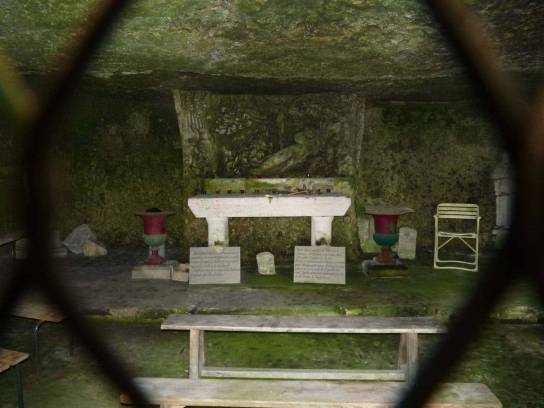 Photo creditJack maLicenseCC BY-SA 3.0


About
The Cave of Saint Cybard is a major religious and historical site where the hermit Saint Cybard lived in the 6th century, leading a life of asceticism and prayer with a few fellow monks.
The cave is located beneath Angoulême's northern rampart (the Beaulieu Rampart) and extends into the Jardin Vert, bearing witness to the city's ancient and medieval urban planning. According to historical and hagiographic accounts, Saint Cybard, also known as Eparchius, settled there as a hermit to devote himself to meditation and prayer, building a rudimentary cell for himself and his fellow monks. This choice of location, sheltered beneath a fortified rampart, allowed him to lead a secluded life while remaining close to the city, facilitating communication with the faithful and pilgrims who came seeking advice and blessings.
Religious and Historical Significance
- The site symbolizes Christian asceticism in the early Middle Ages, embodying the movement of monks and hermits to isolated places to draw closer to God.
- The cave and the presence of Saint Cybard gave rise to local pilgrimages, as his example of a pious life has inspired many generations.
- The ramparts of Angoulême make the site not only spiritual but also strategic, illustrating the common association between religious sites and defensive structures during that period.
The Life of Saint Cybard
Saint Cybard was born toward the end of the 5th century and distinguished himself as an exceptional hermit for his time, devoted to a simple life and constant prayer. Choosing the cave allowed him to combine solitude with a life of faith lived in close proximity to a community. The hermitage has often been described as a place where disciples could learn spiritual discipline under his guidance, thereby maintaining a living monastic tradition in Angoulême.
In summary, the Grotto of Saint Cybard is both a symbol of medieval piety and a historic site that integrates spirituality and urban heritage. Today's visitors can view the site as a tangible testament to the region's religious history and medieval architecture.