Champ de Mars Square
-
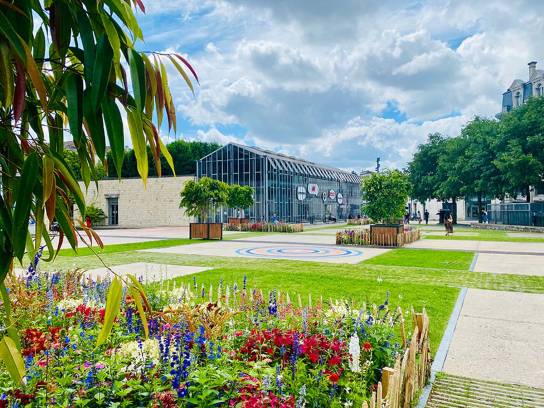 Photo creditgoldObot

About
The Champ de Mars is one of Angoulême’s main public spaces. Located at the foot of the historic city, between the old plateau and the newer neighborhoods, it is the result of several centuries of urban transformation, evolving from a military and defensive space into a vast civic, commercial, and cultural square.
History
The Champ de Mars site is located where the city’s medieval expansion once lay. In the 13th century, when Angoulême’s fortifications were expanded to include the Saint-Martial suburb, the area now occupied by the square was incorporated within the new city walls. Remnants of these ramparts still remain nearby, bearing witness to the site’s strategic role in the city’s defense.
Starting in the 18th century, as in many French cities, the name “Champ de Mars” came to refer to a vast open space used for military drills, gatherings, and public ceremonies. The area gradually became a venue for fairs, markets, and popular events.
In the 19th century, with Angoulême’s urban development and the arrival of the railroad, the square took on a more civilian function. It hosted markets, festivals, and exhibitions and became a major transportation hub between the upper town and the new neighborhoods.
At the end of the 20th century and into the early 21st century, the site underwent a major urban redevelopment aimed at creating a space more open to pedestrians, while incorporating an underground parking garage and new public facilities.
Architecture and Urban Planning
The square’s architecture reflects several periods in Angoulême’s history:
- The medieval remains, including the ramparts located in the immediate vicinity, serve as a reminder of the former boundaries of the fortified city.
- Contemporary administrative buildings, notably the administrative complex bordering the square, illustrate developments from the second half of the 20th century.
- The underground parking garage and extensive surface-level developments reflect a modern urban design that prioritizes a large, multipurpose public space.
- The surrounding area features a mix of 19th- and 20th-century buildings, characteristic of the gradual evolution of the city center.
Today, the area as a whole seeks to reconcile historical heritage with contemporary uses: traffic, events, markets, and recreational spaces.
Heritage
The Champ de Mars benefits from its immediate proximity to Angoulême’s remarkable heritage site, which protects the historic center and its urban vistas. The protection regulations also apply to views of the ramparts and the city’s main historic monuments.
The area’s heritage includes, in particular:
- the remains of the medieval ramparts, listed as Historic Monuments;
- the views of the old town and its promontory;
- the proximity to the covered market and the historic shopping districts;
- the redeveloped public spaces that now form one of Angoulême’s main squares.
A Major Gathering Place
Today, the Champ de Mars square is one of Angoulême’s main gathering places. It regularly hosts:
- local markets and events;
- cultural events, particularly during the International Comics Festival;
- public demonstrations and community gatherings;
- walking paths connecting the historic city center to newer neighborhoods.
As such, the Champ de Mars perfectly illustrates Angoulême’s evolution: from a space associated with medieval defense and military drills, it has become a large, contemporary urban square where heritage, architecture, and daily life come together.
Visit
Conditions de visites
Opening hours
Prices
Equipment and services
- Wheelchair-accessible entrance
- Wheelchair-accessible car park
- Wheelchair-accessible toilets
- Toilets