Place Mulac
-
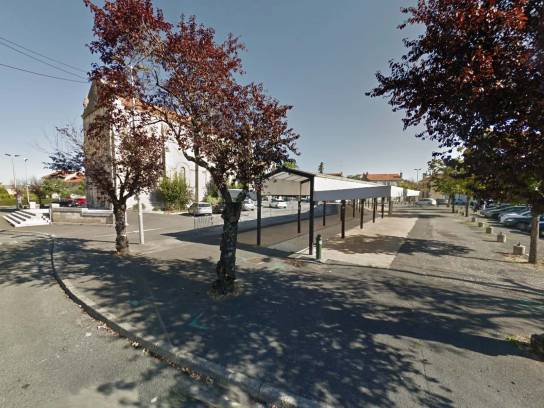 Photo creditgoldObotLicenseFree Art License

About
Place Mulac is a square located in the Saint-Cybard neighborhood, at the foot of Angoulême’s historic plateau. Today, it serves as a transitional space between the old town and the neighborhoods of the Charente Valley.
History
The Saint-Cybard neighborhood is one of the oldest in Angoulême. Its development is linked to the former Saint-Cybard Abbey, founded near the tomb of the hermit Cybard in the 6th century. For centuries, this suburb developed outside the ramparts of the upper town, taking advantage of its proximity to the Charente River for artisanal and commercial activities, particularly mills and paper manufacturing.
Mulac square is a more recent urban development, which took shape in the 19th century as the neighborhood was urbanized. It has become a hub for the roads connecting the Saint-Cybard suburb to the rest of the city. Even today, it regularly hosts temporary installations and urban development projects, reflecting its role in the neighborhood’s daily life.
Architecture
The square’s most prominent architectural feature is the Church of Saint-Cybard.
Built between 1866 and the late 1860s, it is the work of Édouard Warin, the city architect of Angoulême. Its architecture is part of the 19th-century Neo-Romanesque movement, heavily influenced by Paul Abadie’s restorations in Charente.
Among its features are:
- a simple façade made of local limestone;
- a bell tower overlooking the square;
- semicircular arches characteristic of the revived Romanesque style;
- a central location that defines the entire urban space of the square.
Heritage
The heritage of Mulac square is primarily urban and religious.
It includes, in particular:
- Saint-Cybard Church, the neighborhood’s main landmark;
- a cluster of 19th- and early 20th-century houses representative of Angoulême’s former suburbs;
- the proximity to the former site of Saint-Cybard Abbey, a major landmark in Angoulême’s religious history;
- an environment covered by Angoulême’s urban heritage protection policy, which aims to preserve the city’s views, built environments, and historic landscapes.
Heritage Significance
Mulac square illustrates the transition between two distinct aspects of Angoulême:
- the medieval fortified city on the plateau;
- the industrial suburb of Saint-Cybard, characterized by industries linked to the Charente River (mills, paper mills, crafts).
While it lacks the monumental prestige of the historic squares in the city center, it stands as an important testament to 19th-century urban expansion and the social history of the Saint-Cybard neighborhood. The church overlooking the square remains its principal architectural and heritage landmark.