Angoulême's 1914–1918 War Memorial
-
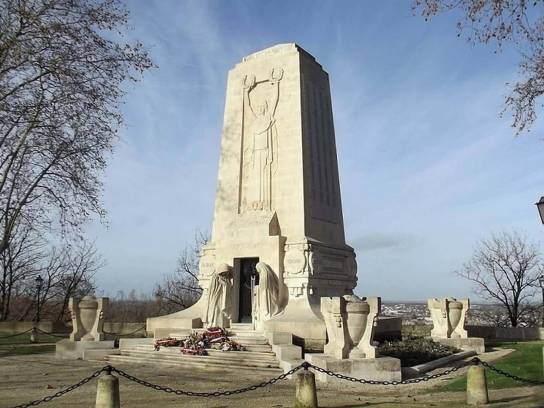 Photo creditGérard LerayLicenseCC BY-NC-SA 2.0

About
The World War I memorial in Angoulême is one of the city’s most important memorial sites. Located on Place Beaulieu, on the plateau overlooking the Charente Valley, it honors the people of Charente who died for France during the Great War.
History
Following World War I, the municipality of Angoulême decided to erect a departmental monument to honor the thousands of soldiers from the Charente region who had lost their lives. A competition was held, and the winning design was created by architect Roger Baleix, based on a model by architect Breil, in collaboration with Charente-born sculptor Émile Peyronnet. The monument was dedicated on November 11, 1926, eight years after the Armistice.
The chosen location, at the western end of the Angoulême plateau, was not chosen at random: it offers a commanding and visible vantage point, making the monument a symbol of remembrance for the entire department.
Description
The monument, built of limestone, features a monumental Art Deco composition while retaining classical elements.
Its main elements are:
- a tall obelisk standing on a large podium accessible by several steps;
- an allegory of France, carved in low relief on the obelisk, raising laurel wreaths as a sign of victory;
- two groups of women in mourning representing the mothers and wives of fallen soldiers;
- a young orphan holding a bouquet of flowers, symbolizing the children who were victims of the war;
- discs bearing the names of the major battles in which the Charente regiments fought;
- a burial chamber built at the base of the obelisk.
Symbolism
Unlike some highly militaristic monuments, the one in Angoulême places particular emphasis on the families’ grief and the duty to remember. The very understated inscription “To Our Dead” expresses a collective tribute rather than a celebration of war. Historians consider it to strike a balance between postwar patriotism and a more pacifist sensibility.
Today
The monument remains the main site for commemorative ceremonies in Angoulême, particularly those held on May 8 and November 11. It retains great historical and commemorative significance for the city and for the Charente department.
Opening hours
Prices
Equipment and services
- Wheelchair-accessible entrance