Château de l'Oisellerie
-
 Photo creditJLPCLicenseCC BY-SA 3.0
-
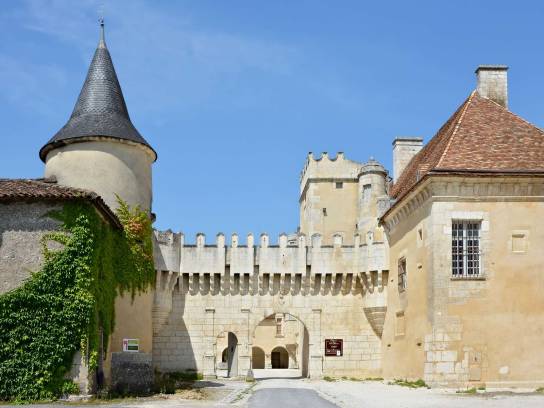 Photo creditJLPCLicenseCC BY-SA 3.0
-
 LicenseCC BY-SA 3.0
-
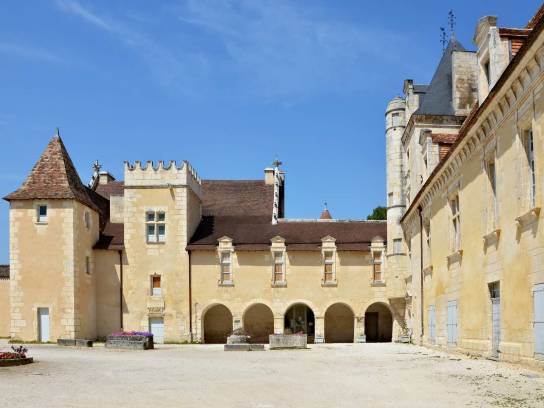 Photo creditJLPCLicenseCC BY-SA 3.0
-
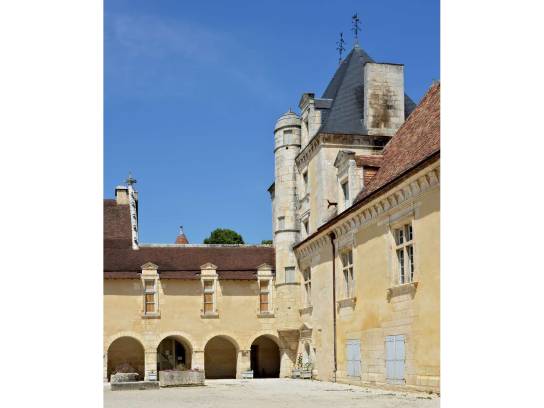 Photo creditJLPCLicenseCC BY-SA 3.0
-
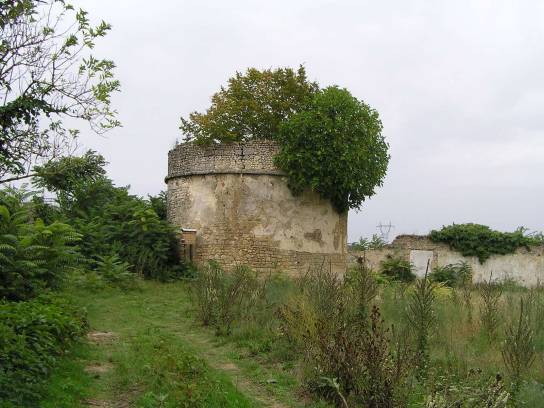 Photo creditRosierLicenseCC BY-SA 3.0
-
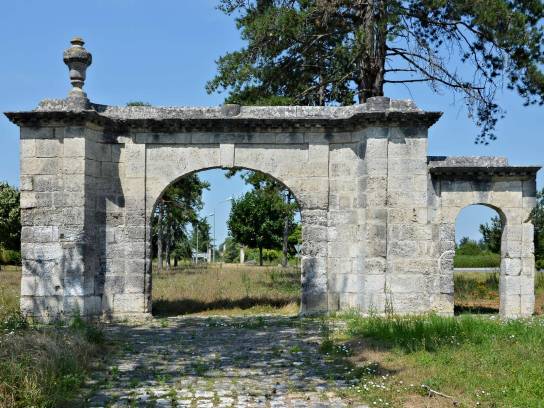 Photo creditJLPCLicenseCC BY-SA 3.0
-
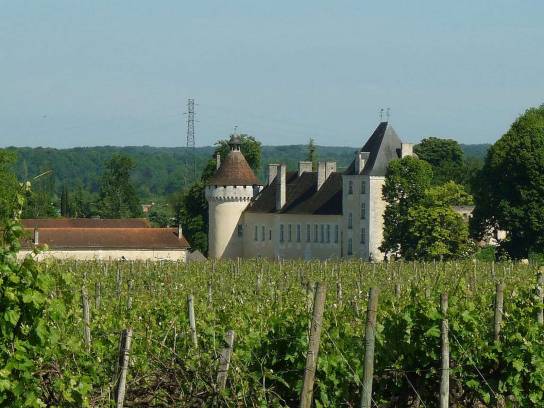 Photo creditJack maLicenseCC BY-SA 3.0


About
In La Couronne, the Château de l’Oisellerie bears traces of a building project begun in the late 15th century for Arnauld Calluaud, before being extended in the early 16th century. Its architecture combines Gothic elements with forms that foreshadow the Renaissance.
The estate’s name recalls its origins, which are linked to a former falconry that belonged to the Abbey of Notre-Dame de La Couronne. The site is also associated with the stay of François I in 1526, following his captivity in Spain.
The château now boasts an interesting feature: this listed building forms part of an agricultural college. Its current function thus continues the history of what was once a rural and agricultural estate.
Must-sees
- The courtyard and the towers: these offer an insight into the castle’s gradual development.
- The Gothic and Renaissance sections: observe the differences in architectural style between the various phases of construction.
- The listed garden and its outbuildings: dovecote, moats, fountain, well and other listed architectural features.
Discover
Introduction
The Château de l’Oisellerie is situated to the south of Angoulême, within the municipality of La Couronne. Its history is closely linked to that of the Abbey of Notre-Dame de La Couronne and to a former falconry tradition, which is said to have given the estate its name.
Construction of the château began in 1498, on the initiative of Arnauld Calluaud, a councillor of Angoulême. The earliest section retains a largely Gothic architectural style, particularly in the design of the gable and the stair turret. The château was subsequently extended in the early 16th century, notably by Jean Calluaud, Bishop of Senlis and Abbot of La Couronne.
The complex thus stands as a testament to the architectural transition between the late Middle Ages and the Renaissance in the Angoumois region.
History
An ancient estate linked to the abbey
Before the castle was built, the estate was associated with a falconry under the authority of the Abbey of Notre-Dame de La Couronne. This function explains the traditional origin of the name ‘L’Oisellerie’.
1498: the Calluaud construction project
Arnauld Calluaud began building the château in 1498. The older section is particularly recognisable by its gable, decorated with Gothic elements, and its square turret housing a spiral staircase.
16th century: expansion and the Renaissance
Jean Calluaud subsequently enlarged and embellished the residence. New structures were added to the original main building, gradually giving the château the more complex layout that can be seen today.
1526: François I’s stay
The château is associated with François I’s stay in 1526, upon his return from captivity in Spain. Historical sources report that he stayed there after a deer hunt during which he injured his arm.
17th–18th centuries: change of ownership
The Calluaud family retained ownership of the estate until the end of the 17th century. The château was sold in 1678 and subsequently passed into the hands of the Maulde family, who owned it for around two centuries. Work was carried out in the 18th century to adapt the residence to the standards of comfort of the time.
20th century: a château transformed into an educational institution
At the start of the 20th century, the estate became home to an agricultural college, which later became the Oisellerie Agricultural College. It continues to serve this purpose today.
Timeline
- 1498 - Construction began on the initiative of Arnauld Calluaud.
- Early 16th century - Extension of the château and development of the Renaissance sections.
- 1526 - Visit by François I.
- 1678 - Sale of the estate by Jean Calluaud.
- 17th-18th centuries - The château passed into the hands of the Maulde family, amongst others, and underwent alterations.
- Early 20th century - An agricultural college was established there.
- 8 July 1911 - The château was listed as a historic monument.
- 23 October 1992 - The garden plots and architectural features were listed.
- Today - The château is home to the Oisellerie Agricultural College.
Architecture & heritage
The château comprises a complex of buildings dating from several phases of construction.
The oldest part retains Gothic features: a high gable, carved decoration and a square turret housing a spiral staircase. The extensions dating from the early 16th century gradually introduced an architectural style more in keeping with the Renaissance.
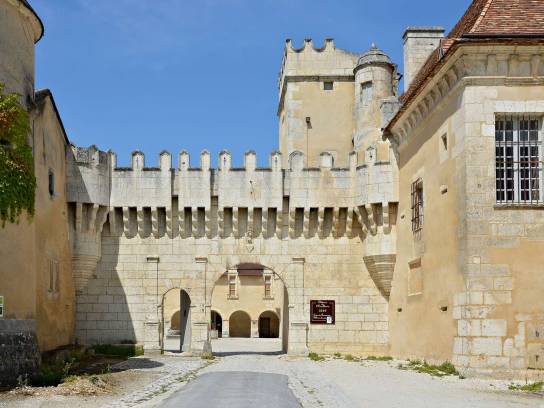
The courtyard is notably characterised by towers situated at the corners of the older complex. The entrance gate combines a pedestrian gate and a gate for horses, in a design that still evokes the residence’s residential and defensive functions.
The garden is also an important heritage feature. Its 1992 listing specifically includes the boundary walls, gates, dovecote, terrace, moats, fountain and well.
Notable works and features
- The sculpted decorations on the Gothic sections.
- The square turret and its spiral staircase.
- The towers in the courtyard.
- The entrance gate.
- The dovecote and the water features in the garden.
- The antique sundial.
People associated with the site
- Arnauld Calluaud – The driving force behind the building project that began in 1498, he belonged to a family with close ties to the political and administrative life of Angoulême.
- Jean Calluaud – Bishop of Senlis and Abbot of La Couronne, he played a part in the expansion and embellishment of the château.
- François I – His stay at the Oisellerie in 1526 is one of the best-known historical episodes associated with the château.
Restorations and alterations
The château has undergone several phases of alteration. In the 18th century, the Maulde family undertook work designed to bring the residence up to the standards of comfort of the time. In the early 20th century, the change of use to agricultural education in turn altered the way the estate was utilised.
Did you know?
The name “Oisellerie” is generally explained by the former presence of an oisellerie, that is to say, a facility linked to falconry, which was part of the Abbey of Notre-Dame de La Couronne.
Explore
Guided tour
- Start at the entrance to the estate
Take a look at the design of the gate and the towers flanking the entrance to the courtyard. - Look for traces of the Gothic style
On the oldest parts, look at the gables, the carved details and the stair turret. - Spot the transition to the Renaissance
The extensions dating from the early 16th century allow you to trace the evolution of the architectural style. - Observe the relationship between the castle and its outbuildings
The dovecote, the moats and the water features show that the estate was not limited to the residential building. - View the château as an agricultural estate
Its current use as an agricultural college reflects the site’s rural heritage and forms part of its contemporary history.
Look here
- The stair turret – This is one of the most easily recognisable features of the castle’s older section.
- The gables – The Gothic decoration allows us to date the first phase of construction to the turn of the 15th and 16th centuries.
- The gateway and towers – The entrance complex provides an insight into the layout of the old courtyard.
- The garden – Don’t just focus on the castle: several features of the garden are also listed as historic monuments.
Hidden detail
If access allows, look out for the old sundial in the castle’s kitchen garden.
Then / Now
- Yesterday – The estate was associated with a falconry centre under the authority of La Couronne Abbey, before becoming a stately home and then a family estate.
- Today – The château is home to an agricultural college. This continuity of use gives the site a special character: the historic monument remains an integral part of an estate dedicated to education and agriculture.
A landscape worth exploring
L’Oisellerie forms part of the landscape of La Couronne, south of Angoulême. The estate is situated in an area where built heritage, agricultural land and the legacy of the former Abbey of La Couronne converge.
Nearby
- Notre-Dame de La Couronne Abbey – worth exploring in relation to the history of L’Oisellerie, on which the estate historically depended.
- Angoulême – its historic centre and numerous monuments offer further opportunities to explore the heritage of the Angoumois region.
- Landscapes of La Couronne and the south of Angoulême – to situate the château within its rural and scenic surroundings.
Continue the tour
A visit to the Oisellerie is best combined with a visit to the former Abbey of La Couronne. This combination provides a better understanding of the links between religious institutions, rural estates and seigneurial residences that shaped this region.

Visit

Conditions of visits:
Opening hours
Prices
Equipment and services
- Wheelchair-accessible entrance
- Wheelchair-accessible car park