Hôtel-Dieu
-
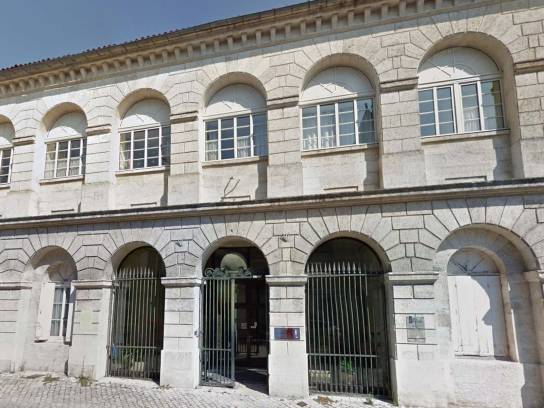 Photo creditgoldObotLicenseFree Art License
-
 Photo creditgoldObotLicenseFree Art License
-
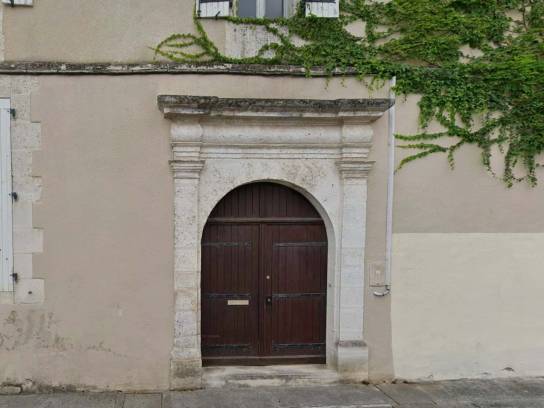 Photo creditgoldObotLicenseFree Art License


About
The Hôtel-Dieu d'Angoulême is one of the city's major 19th-century public buildings. Built to meet the healthcare needs of a growing population, it reflects the evolution of hospital architecture and the history of public welfare in Charente. It encompasses older structures such as the former 17th-century Hôtel-Dieu, also known as the Notre-Dame-des-Anges hospice on Place du Petit Beaulieu, and the former 13th-century Cordeliers Chapel.
History
The Hôtel-Dieu was built between 1825 and 1828, at a time when the authorities sought to replace hospital facilities that had become inadequate. Its location near the older Cordeliers Chapel ensures continuity with Angoulême's medieval hospital tradition. This chapel, which is part of the hospital complex, houses the tomb of the writer Jean-Louis Guez de Balzac.
Throughout the 19th and 20th centuries, the facility was expanded and modernized to keep pace with advances in medicine. As hospital operations were gradually transferred to newer facilities, the site underwent a repurposing. Some parts now house hospital services, while others are used for cultural or administrative activities.
Architecture
The Hôtel-Dieu is a fine example of the Neoclassical style that characterized many public buildings during the Restoration.
Its main characteristics are:
- a symmetrical layout organized around a central section;
- simple facades made of local limestone;
- a regular arrangement of windows and doors that promotes lighting and ventilation in the patient care rooms;
- a functional layout adapted to 19th-century hospital requirements.
The building is part of a generation of public structures that also includes the courthouse and the prefecture of Angoulême, illustrating the city's urban renewal during this period.
Heritage
The Hôtel-Dieu is an important part of Angoulême's heritage for several reasons:
- it illustrates the history of medicine and public welfare;
- it is part of the monumental ensemble of Angoulême's historic center;
- its proximity to the Cordeliers Chapel enhances its historical and architectural significance;
- it reflects the urban planning of the first half of the 19th century.
The neighborhood in which it is located is part of the heritage areas being studied by the city of Angoulême for the protection and enhancement of its built heritage.
A testament to the city's evolution
The Hôtel-Dieu marks the transition from the traditional hospital, centered on religious charity, to the modern hospital, designed according to criteria of hygiene, functionality, and rationality. It thus accompanied Angoulême's transformation into a modern prefecture in the 19th century, alongside other major projects such as the prefecture building, the courthouse, and, a few decades later, Paul Abadie's city hall.