Remains of the Taillefer Palace
-
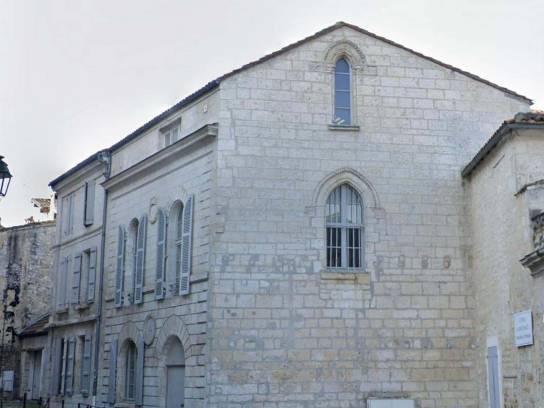 Photo creditGoogle streetLicenseAll rights reserved
-
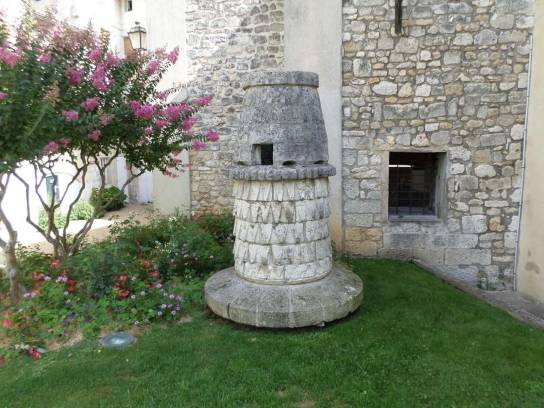 Photo creditgoldObot


About
The Taillefer Palace is one of the most important—yet also one of the least known—buildings in Angoulême's medieval history. Although most of it has since been lost, it served as the residence of the Counts of Angoulême of the Taillefer dynasty and had a profound impact on the city's layout.
History
The palace was built in the early 11th century, under Count Guillaume IV Taillefer, during the first decades of the year 1000. It occupied a vast plot of land within the ancient ramparts, in the heart of the medieval city. At that time, it served as the official residence of the Counts of Angoulême, before the count's power gradually shifted to the castle located on the site of the current city hall.
From its very origins, the palace was associated with a castle chapel, which later became the Church of Saint-André. In 1020, this collegiate church was donated to the Abbey of Saint-Amant-de-Boixe, a testament to the religious and political importance of the palace complex.
Beginning in the 12th and 13th centuries, the palace gradually lost its role as the primary residence to the count's castle, but the neighborhood retained its prestige throughout the Middle Ages. Over the centuries, the buildings were altered, subdivided, and then largely destroyed.
Architecture
Our knowledge comes primarily from archaeological research and studies conducted as part of the Angoulême Preservation and Enhancement Plan.
The main known features are:
- a large east-west-oriented building, constructed with small ashlar masonry characteristic of architecture from the year 1000;
- a projecting square tower integrated into the palace;
- a cornice with corbels still visible on some of the remains;
- extensive gardens occupying a significant portion of the block.
The architecture dates to the pre-Romanesque and early Romanesque periods, featuring construction techniques typical of the first major seigneurial buildings of the 11th century.
Preserved Remains
The palace has almost entirely disappeared, but several elements remain:
- Its main remnant is incorporated into the buildings of the Saint-Paul School, where the following remain:
- a medieval gable;
- fragments of small-stone masonry dating from the year 1000;
- a Romanesque cornice with corbels visible on certain walls;
- Remains incorporated into the modern buildings on the block located northwest of the old town;
- The most visible remnant is a medieval stone chimney, often mistakenly called the "lantern of the dead,” located in Saint-André Square.
These elements constitute the rare surviving remnants of the residence of the first Counts of Angoulême. They are identified in the city's heritage studies as exceptional vestiges of medieval civil architecture.
Heritage Value
The Taillefer Palace holds significant heritage value for several reasons:
- it is one of the oldest known count's palaces in southwestern France;
- it illustrates the rise to power of the Counts of Angoulême in the 11th century;
- it has permanently shaped the urban fabric of the historic center;
- its remains are extremely rare examples of civil architecture from the year 1000.
The Palace Today
The palace is no longer visible as a monumental structure. Its location corresponds roughly to the area between Saint-André Church and Saint-Paul School, in the historic center of Angoulême. The preserved remains are incorporated into more recent buildings and are generally not accessible to the public.
Thanks to archaeological studies conducted as part of the Plan for the Preservation and Enhancement of the Historic Center, the Taillefer Palace is now recognized as an essential element of Angoulême's urban history and is one of the city's major heritage sites.